Hello everyone, we are on a small island in Southeast Asia. Previously, all electricity on this island was supplied by these three diesel generator sets.
However, due to high noise levels and expensive fuel costs, it has now been upgraded to a PV-ESS-Diesel smart microgrid system.
As we can see, this area has abundant solar resources and long hours of sunlight.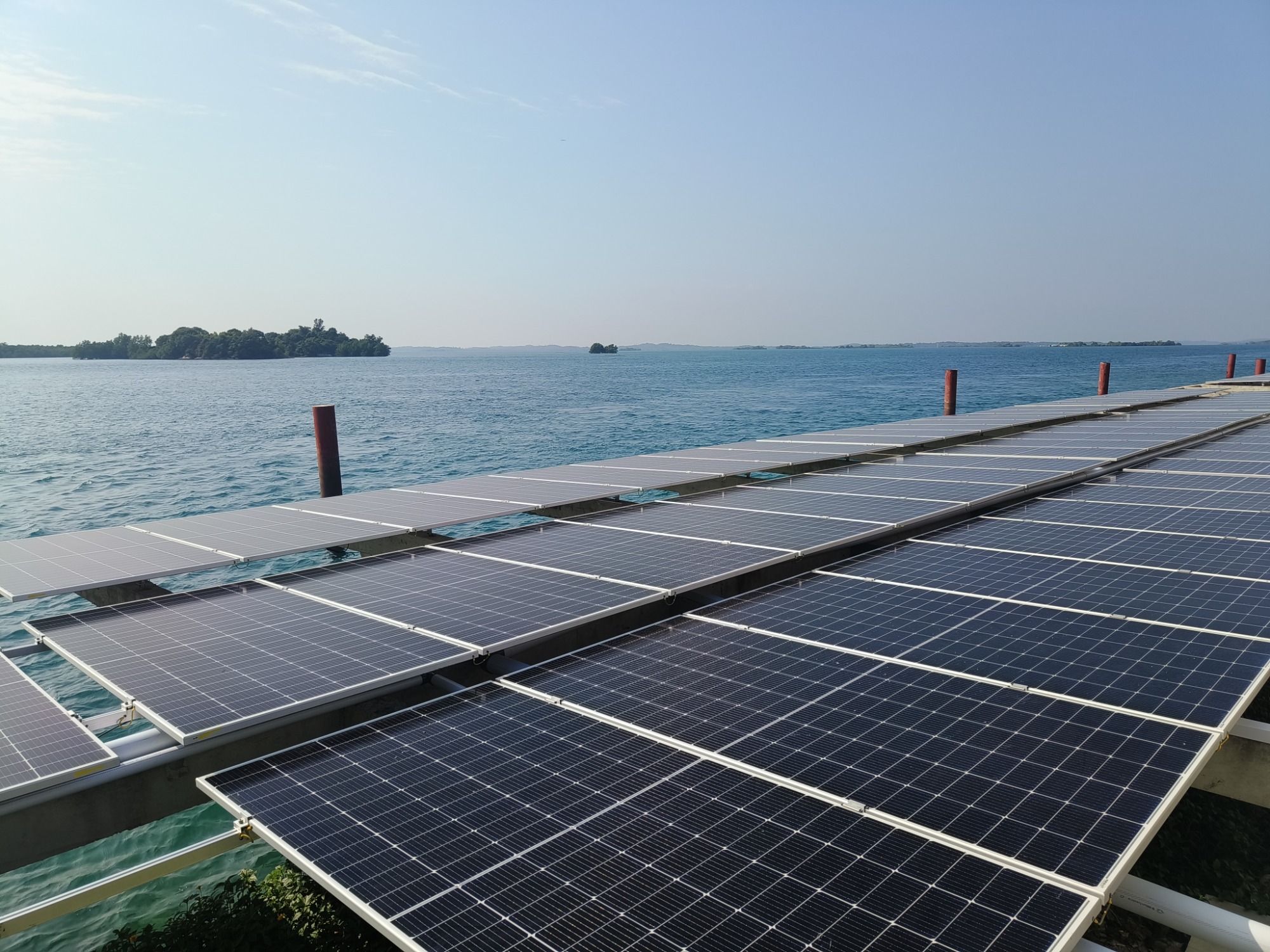
An 800KW photovoltaic system has already been installed. This location is one of the small docks on the island, and our energy storage system is installed nearby. To prevent salt spray corrosion, both the energy storage system and the PCS have been fully enclosed and are cooled using corrosion-resistant air conditioning. The current installed capacity is 1MWh, but our PCS is configured for 1500KW. Since the current PV capacity is 800KW, 1MWh is far from sufficient. The owner now requires an additional 3MWh, bringing the microgrid system to a total of 4MWh.
Inside the power distribution room, the first thing you see upon entering is a row of low-voltage switchgear cabinets, which supply power to local loads. Behind them are two transformers and high-voltage switches.
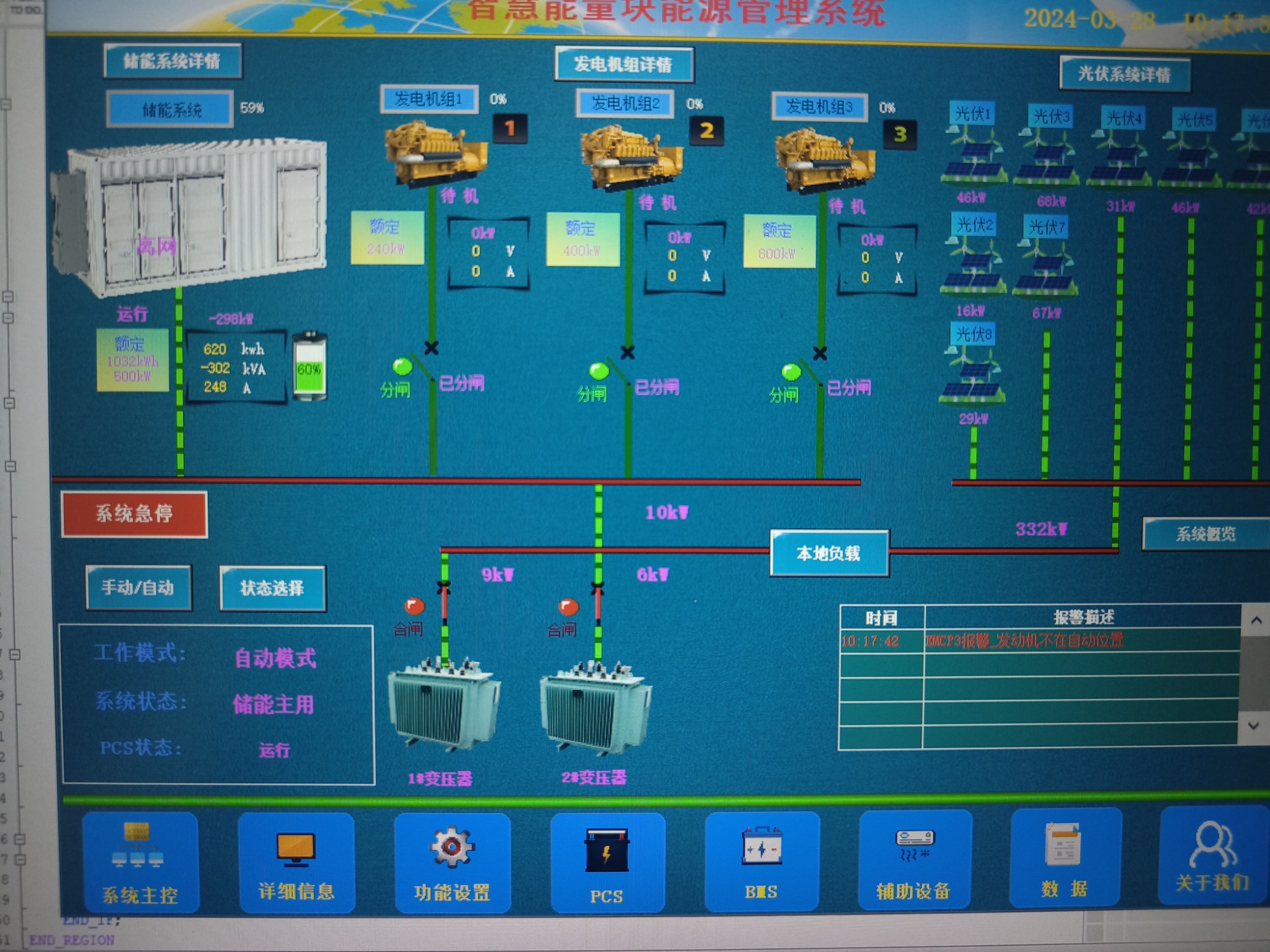
Over here are the PV inverters, as this rooftop has installed over 100KW of photovoltaic systems. On the left is our EMS system, which clearly displays the energy storage + generator sets + PV. The 8 PV inputs are divided into 5 circuits connected to the busbar. It prioritizes supplying power to the loads, with any excess directed to the energy storage system. This interface provides more detailed parameters of the generator sets, showing data for each unit, including water temperature, oil pressure, voltage, frequency, and all other parameters. Now, let’s take a look at the PV layout. Here, the power of each PV unit can be monitored, and they can be operated—started or stopped—making it very user-friendly and providing an excellent user experience. Since the customer has additional loads located 2 kilometers away, power can be directly transmitted to these loads through these two transformers. In this low-voltage cabinet, three switches correspond to the three generator sets, one is for the energy storage system, and the others are for the two transformers, local loads, and PV connections. On this distribution cabinet, we have also installed a remote EMS interface, allowing operation from two different locations, which is very convenient. At the back are the three diesel generator sets, which only start when the energy storage is insufficient—such as during poor sunlight conditions—to supplement power for the entire system.


 0
0


 VERYPOWER: 27+ Years of Leading New Energy Solutions for Home & Global Markets
 VERYPOWER 125KW Energy Block: High-Efficiency Storage Solution Powering the Industrial & Commercial Energy Revolution
 Supporting dual carbon and storing the future | VERYPOWRR was invited to attend the 3rd International Energy Storage Conference CESC 2025
